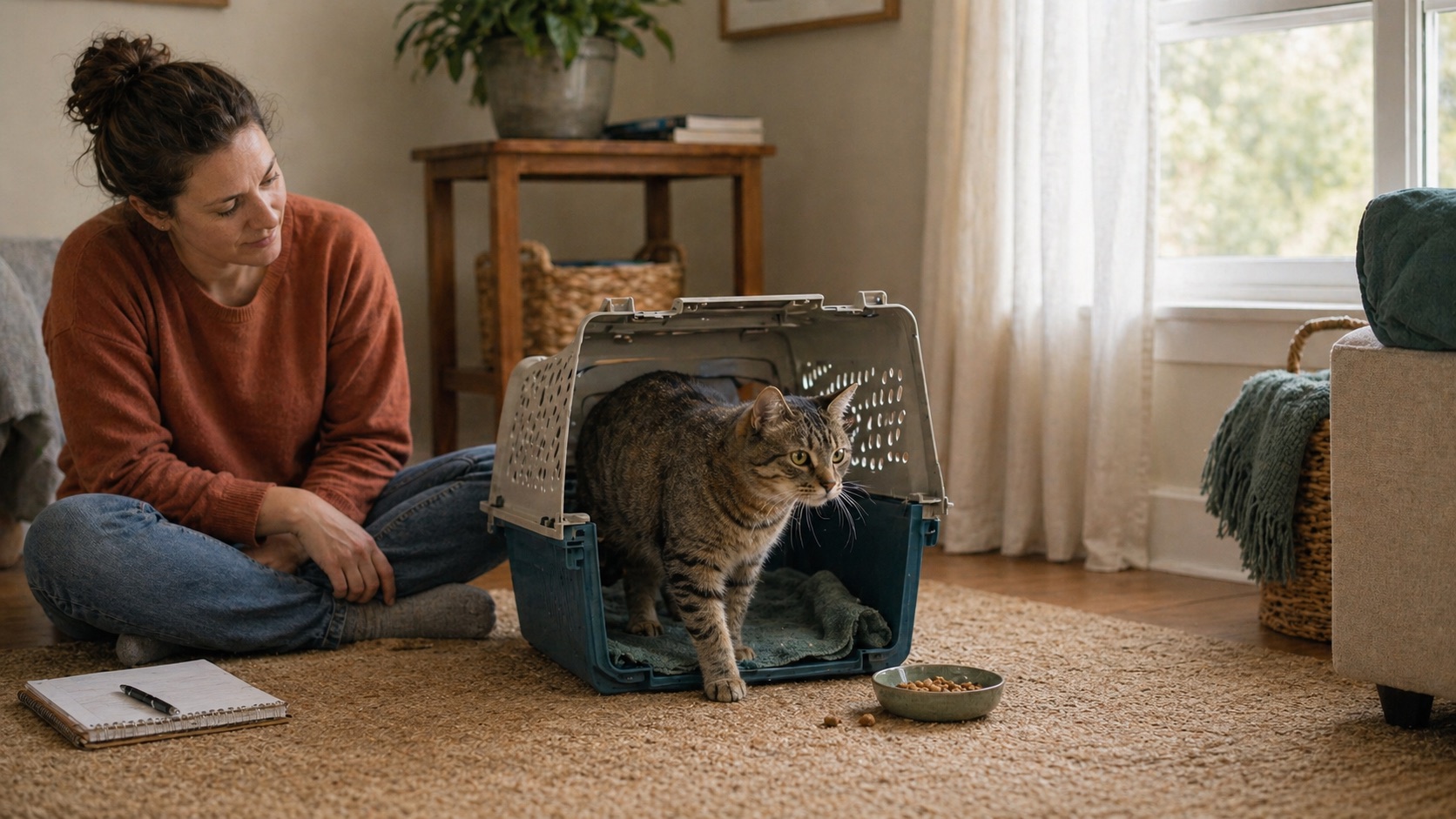
For many cats, the carrier only appears right before a stressful event. The box comes out, the person gets tense, the cat hides, and the appointment begins with a chase. That pattern is common, but it is trainable.
Carrier training is not about tricking a cat. It is about making the carrier part of the home environment long before the day you need it. The International Cat Care guide to getting cats to the vet recommends choosing a sturdy carrier, leaving it out as a familiar resting place, and using bedding that smells like home.
Start with the carrier as furniture
Put the carrier in a quiet room with the door open or removed. Add a soft towel. Drop treats near the entrance, then just inside, then farther back only if the cat is comfortable. If the carrier has a removable top, take it off at first so the cat can explore without feeling boxed in.
The Fear Free Happy Homes carrier guide gives the right spirit for this work: reward voluntary interaction and move slowly enough that the cat keeps choosing to participate.
Teach one tiny piece at a time
- Day 1: treats near the carrier, no pressure to enter.
- Day 2: treats just inside the entrance.
- Day 3: a meal or high-value treat farther inside if the cat is already comfortable.
- Day 4: briefly place the top on, then remove it again.
- Day 5: close the door for one second, feed, open it.
- Later: lift the carrier an inch, put it down, feed, and stop.
If the cat stops eating, freezes, bolts, or avoids the room afterward, the step was too large. Back up to the last version that felt easy. For nervous cats, successful training can look very boring from the outside.
Make travel less abrupt
Once the carrier is familiar, practice tiny travel pieces: door closes, carrier lifts, carrier moves to the hallway, carrier goes to the car and comes back inside. You do not need to do all of this in one session. In fact, you should not.
VCA’s cat vet-visit guidance notes that cats can benefit from familiar bedding, calm handling, and reducing stress around transport. Their guide to reducing the stress of veterinary visits for cats is a practical reference for making the trip easier before you arrive at the clinic.
Ask the clinic for help before the appointment
If your cat panics, soils the carrier, pants, drools, or cannot be examined safely, tell the clinic before the visit. Many clinics can suggest timing, handling notes, carrier tips, or medication planning. This is especially important for cats who have heart or respiratory concerns, severe fear, or a history of injuring themselves during travel.
A cat who hides from the carrier is not being stubborn. They are remembering a pattern. Change the pattern while nothing urgent is happening, and the box can become a familiar object instead of an alarm bell.
Good resources
- International Cat Care on getting your cat to the vet.
- Fear Free Happy Homes on teaching cats to go into a carrier.
- VCA on reducing the stress of veterinary visits for cats.
- AAFP client brochures for cat-friendly handling and veterinary care topics.