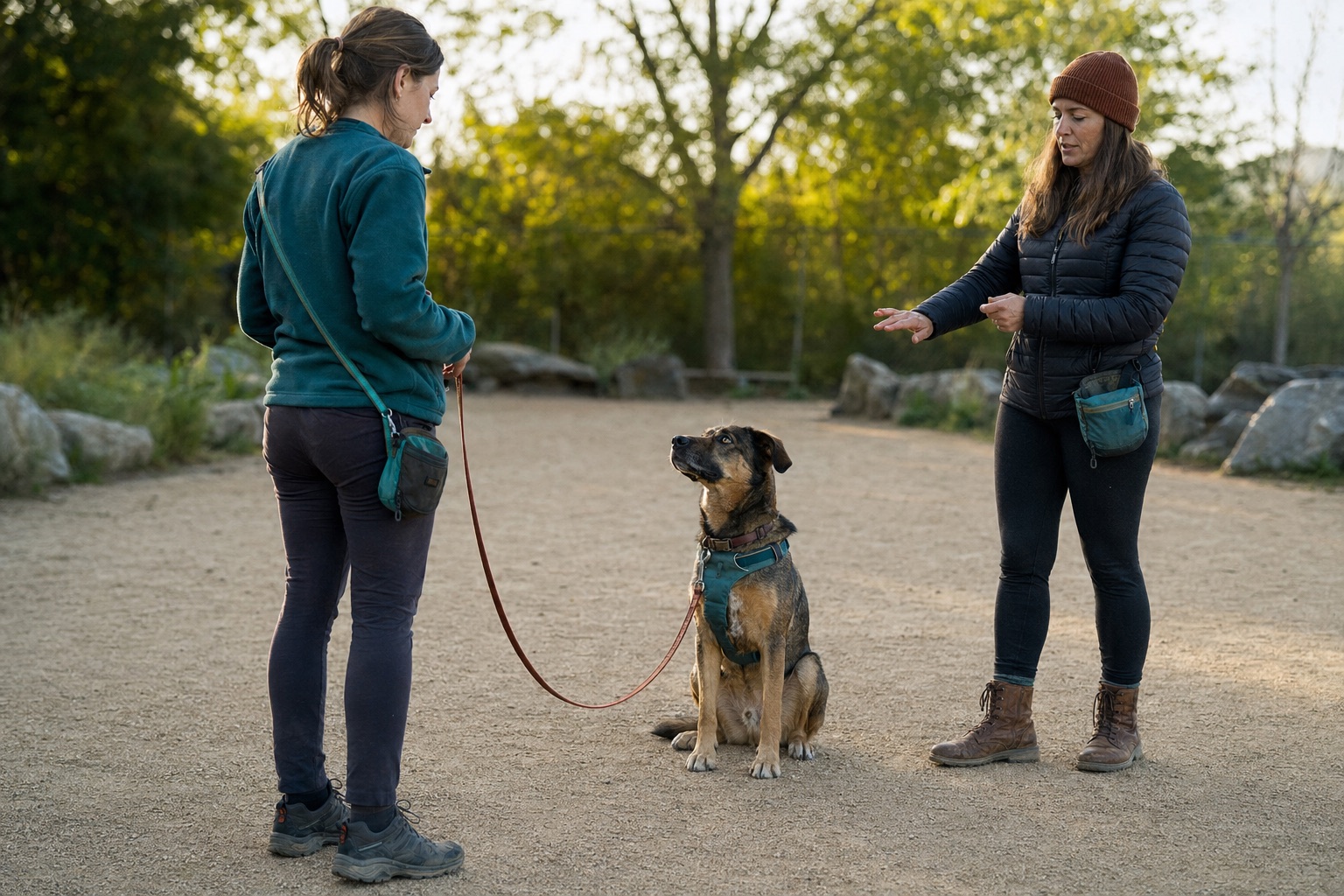
Leash reactivity is the barking, lunging, growling, spinning, pulling, or frantic scanning that can make a walk feel impossible. It is serious, but it is not the same word as aggression. A reactive dog is over threshold: too close, too restricted, too excited, too worried, or too practiced in a pattern that has worked before.
The San Francisco SPCA explains the problem plainly: when a dog is on leash, we restrict their ability to adjust distance. Some dogs react to make a scary thing go away. Others react because they desperately want to get closer and the leash blocks normal movement.
Start with distance, not obedience
If your dog is already barking and lunging, asking for a perfect sit rarely teaches the lesson you want. The first useful skill is distance. Cross the street. Turn around. Step behind a parked car. Use a driveway. Let the dog sniff the ground and recover.
This is not “letting them win.” It is changing the setup so the dog can think. Training happens before the explosion, not in the middle of it.
Track the pattern for one week
Before buying new equipment, write down what your dog reacts to and how far away it was when your dog first noticed it. Note time of day, location, leash length, hunger, weather, recent visitors, pain signs, and whether your dog had already seen several triggers. Trigger stacking matters. A dog who can pass one calm dog at 40 feet may fall apart after five surprises.
Use equipment that reduces harm
A well-fitted harness, a sturdy fixed-length leash, and treats your dog can actually eat outside are enough to begin. Avoid retractable leashes for reactive walks because distance and tension change too unpredictably. Avoid corrections that add pain or fear. AVSAB’s humane training statement recommends reward-based methods and warns against aversive tools for behavior modification.
What “actually helps” looks like
- Choose quieter routes while you train, even if they are boring.
- Reward your dog for noticing a trigger before they erupt.
- Feed while the trigger is visible at a safe distance, then stop when it is gone.
- Practice emergency turns and “find it” treat scatters when no trigger is present.
- End walks earlier if your dog is escalating faster than usual.
If your dog has bitten, made contact, redirected onto the leash or handler, cannot eat outdoors at any distance, or seems painful, involve your veterinarian and a credentialed behavior professional. Reactivity can improve, but safety planning should not wait until everyone is exhausted.
How to choose help without getting sold fear
Reactive-dog owners are easy to upsell because they are tired and embarrassed. Be careful with anyone who promises a fast fix, starts with dominance language, recommends flooding, or asks you to punish warning signs. The CCPDT guide to choosing a trainer is a good screening tool, and AVSAB’s humane training statement explains why reward-based methods are the safer default for behavior problems.
If the reaction includes bites, panic, medication questions, or signs that pain may be part of the picture, ask your vet about a referral to a board-certified veterinary behaviorist. The American College of Veterinary Behaviorists maintains information for owners and a directory for locating specialists.