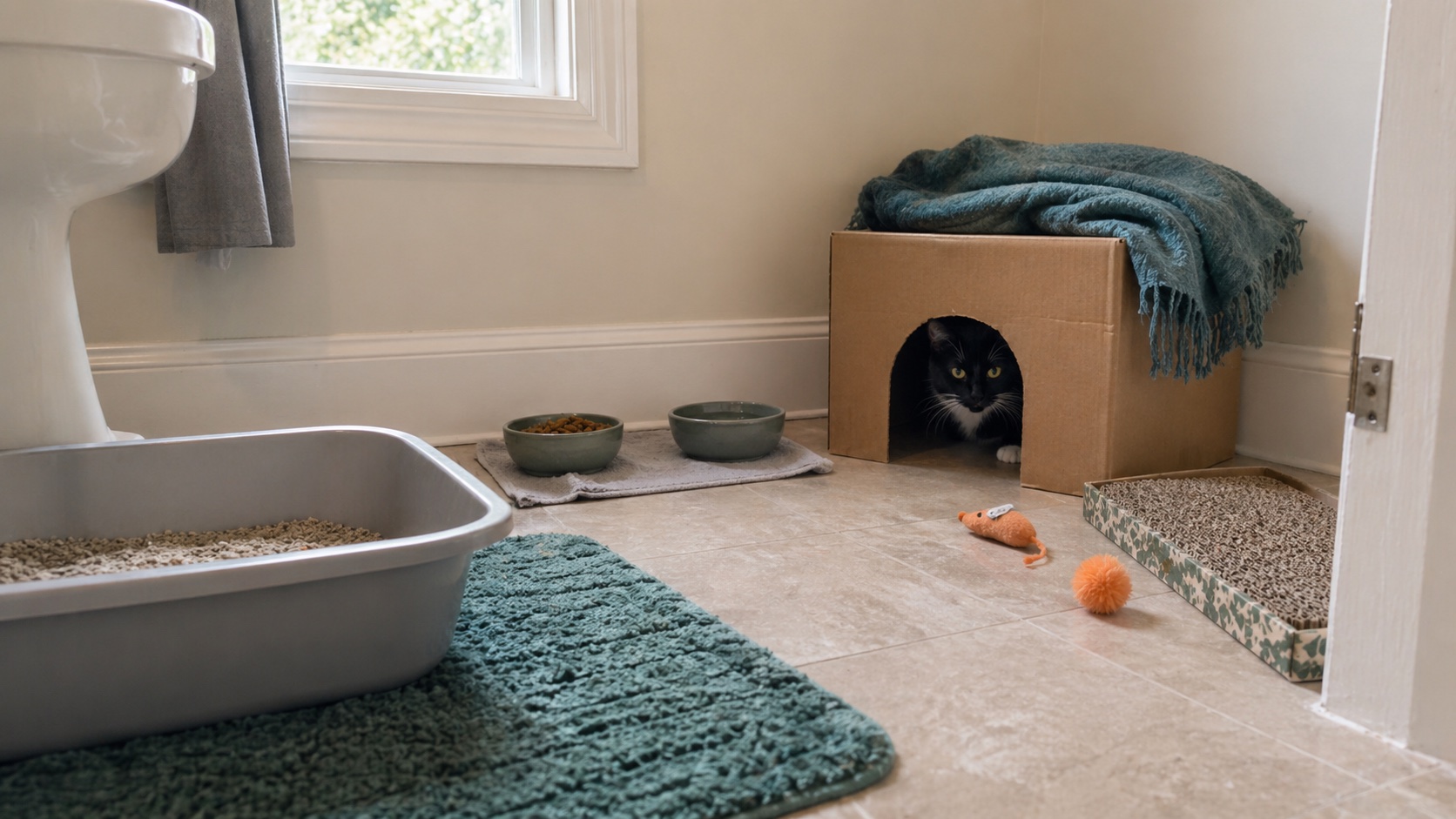
A newly adopted cat who hides is not being ungrateful, stubborn, or dramatic. Cats are territorial animals. A new home means new smells, new sounds, new people, new escape routes, and no familiar map. Hiding is often the safest choice a cat can make while they gather information.
The trick is knowing what to normalize and what to take seriously. A shy cat hiding under the bed for a day is one thing. A cat who is not eating, drinking, urinating, or defecating needs closer attention and often a call to the veterinarian.
Set up one room before opening the whole house
Cats Protection recommends giving a new cat a safe space with the basics: food, water, litter tray, bed, scratching option, toys, hiding place, and access to a high spot if possible. Cornell’s Feline Health Center also emphasizes basics like a clean litter box, appropriate food, fresh water, and scratching outlets.
Keep the food and water away from the litter box. Keep the litter box easy to enter. Many cats prefer simple uncovered boxes and unscented litter. If the cat came from a shelter or foster home, start with the same food and litter when you can, then transition gradually.
Do not pull them out
Sit in the room. Read. Work quietly. Toss a treat nearby and look away. Let the cat decide when to approach. Pulling a frightened cat from a hiding spot can make the person feel active, but it often teaches the cat that people are another thing to avoid.
Watch appetite and litter-box use
Mild appetite changes can happen during transition, but cats are not small dogs. Going without food can become medically concerning, especially for overweight cats or cats with underlying disease. Track what is offered, what is eaten, water intake, urination, stool, vomiting, and hiding changes. Cornell’s Feline Health Center notes that sustained appetite loss can be a sign of many health problems and that a mature cat may be affected if it persists for as little as 24 hours.
Call your veterinarian promptly if your cat is not eating, seems lethargic, strains in the litter box, cries while urinating, repeatedly vomits, has diarrhea, breathes abnormally, or hides while looking painful or weak. A litter-box problem is not automatically “behavior.” Cornell notes that box cleanliness, box type, litter preference, location, and medical issues can all matter.
If you think your cat may have eaten a toxic plant, medication, essential oil, string, ribbon, or unsafe human food, do not wait to see whether they settle in. Call your veterinarian or the ASPCA Animal Poison Control Center at (888) 426-4435. A consultation fee may apply, but fast, specific advice is often what matters in exposure cases.
What progress can look like
- The cat eats when the room is quiet, even if not in front of you.
- You see litter-box use overnight.
- The cat moves between hiding spots instead of freezing in one place.
- They blink, groom, stretch, sniff, scratch, or play briefly.
- They choose to approach, even for a second, then retreat again.
That is enough. The goal is not to make a new cat social on your timeline. The goal is to make the environment safe enough for curiosity to come back.
Good resources
- Cornell Feline Health Center on choosing and caring for a new cat.
- Cats Protection on bringing a cat home.
- Cornell Feline Health Center on anorexia in cats.
- Cornell Feline Health Center on hepatic lipidosis.
- Cornell Feline Health Center on house soiling and litter-box setup.
- ASPCA adoption tips for first-week setup and decompression.