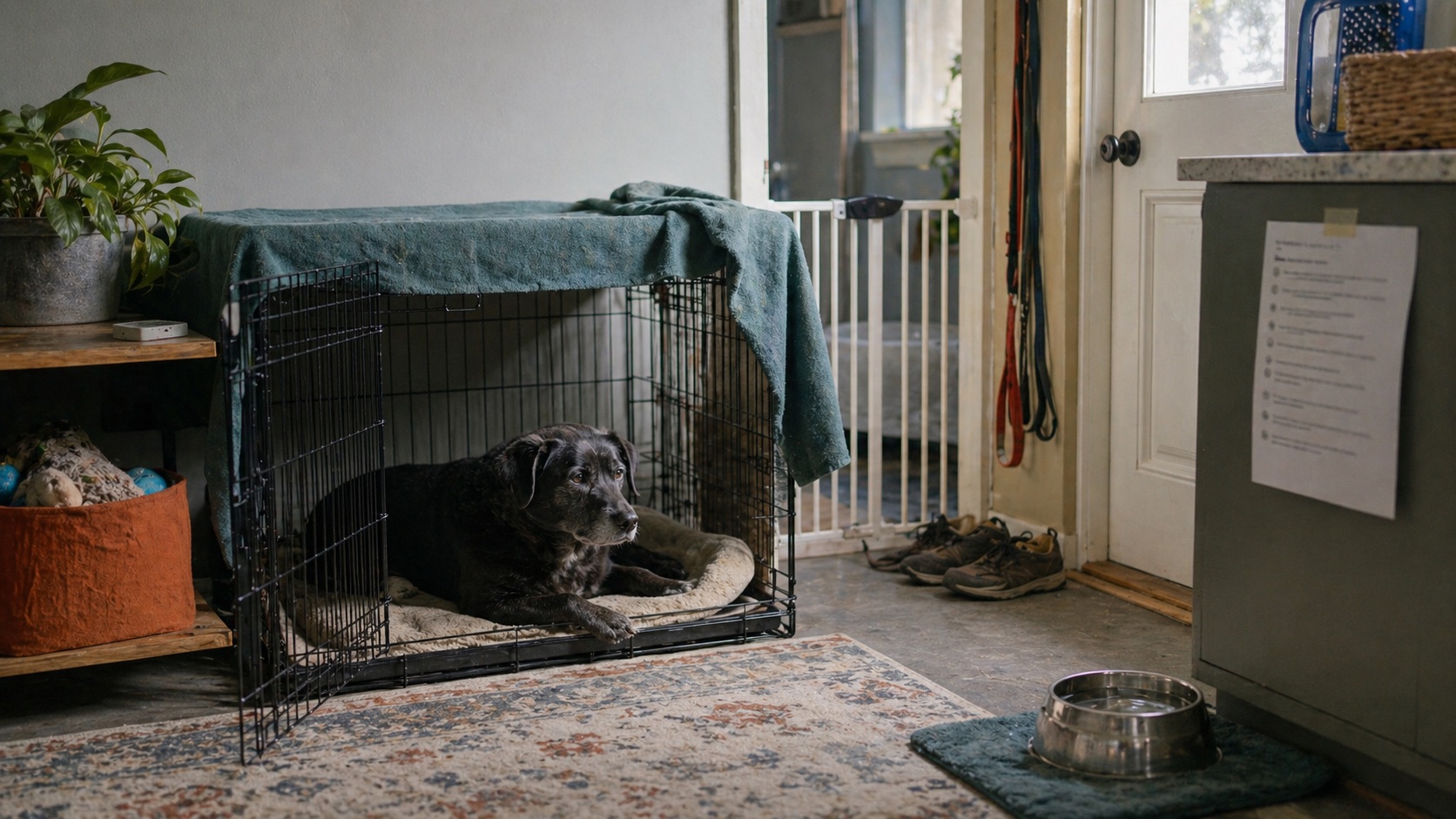
A shelter dog does not arrive as a blank slate. They arrive with a body that has just been moved through kennels, car rides, new smells, new people, and sometimes a history no one fully knows. Even a joyful adoption is still a major transition for the dog.
The first 30 days are not about proving that the adoption was the right choice. They are about lowering stress, creating predictable patterns, and collecting information without overwhelming the animal in front of you. Petfinder’s first-days guidance makes the same point in practical terms: keep the first days calm, ask what and when the dog was eating, start a routine right away, and limit excitement while the dog learns the home.
Days 1-3: shrink the world on purpose
Your new dog does not need a welcome party, a pet-store trip, a dog park visit, or introductions to every neighbor. They need water, sleep, bathroom opportunities, a safe resting place, and people who move predictably.
- Set up one quiet area where the dog can rest without being approached.
- Keep the leash on for yard trips if there is any chance of bolting.
- Feed the food and schedule the shelter or foster home used, if you know it.
- Use baby gates or closed doors to prevent rehearsing trouble before you know the dog.
- Skip dog-to-dog greetings until you have a clearer read on stress and recovery.
Accidents, extra sleep, pacing, not eating much at first, startling at household sounds, or shadowing one person can all happen during transition. That does not mean the dog is broken. It means the dog is gathering information.
Days 4-14: write things down before you explain them
The most helpful thing you can do in the second week is keep a simple log. What time did the dog eat? Where did they sleep? What made them bark, freeze, avoid, growl, jump, or relax? What happened before the behavior? What made recovery easier?
This record matters because trauma language can become too broad. Some dogs are frightened. Some are under-socialized. Some are in pain. Some are frustrated because the leash or the house rules are new. Some have learned behaviors that worked in a previous environment. Your plan gets better when you track patterns instead of guessing.
Days 15-30: add gentle structure
Once the dog is sleeping, eating, and moving through the home with less worry, you can start building skills. Keep sessions short. Reward the behaviors you want to see again: checking in, settling on a mat, taking a treat outside, walking away from a trigger, coming in from the yard, or choosing a chew instead of furniture.
The American Veterinary Society of Animal Behavior recommends reward-based training for dog training and behavior modification, including unwanted and challenging behaviors. That is especially important for a dog who may already be carrying fear. Tools or methods that rely on pain, startle, or intimidation can suppress signals without making the dog feel safer.
When to get professional help
Call your veterinarian if you see sudden behavior changes, repeated vomiting or diarrhea, limping, pain around handling, refusal to eat, or anything that makes you wonder whether the behavior is medical. Behavior is not separate from the body.
Bring in a qualified positive-reinforcement trainer or veterinary behavior professional if the dog has bitten, is guarding resources, panics when left alone, cannot recover after seeing triggers, or seems shut down for days at a time. Getting help early is not a failure. It is often the kindest way to prevent a small pattern from becoming the household’s normal.
If you are not sure who to call, start with your veterinarian and ask for a referral. For behavior cases that may involve anxiety, medication, pain, or a bite history, the American College of Veterinary Behaviorists explains what a veterinary behaviorist does and why medical history matters. For training support, the CCPDT guide to choosing a trainer gives useful red flags, including dominance language and punishment-based methods.
Good resources
- ASPCA adoption tips for preparing the home and understanding the first 3 days, 3 weeks, and 3 months.
- Petfinder’s first 30 days with a new dog for first-day routines and safety basics.
- AVSAB position statements for humane dog training and dominance-theory guidance.
- ACVB guide for animal owners for understanding when veterinary behavior help is appropriate.
- Best Friends dog foster care manual for practical foster-home setup and daily care ideas.